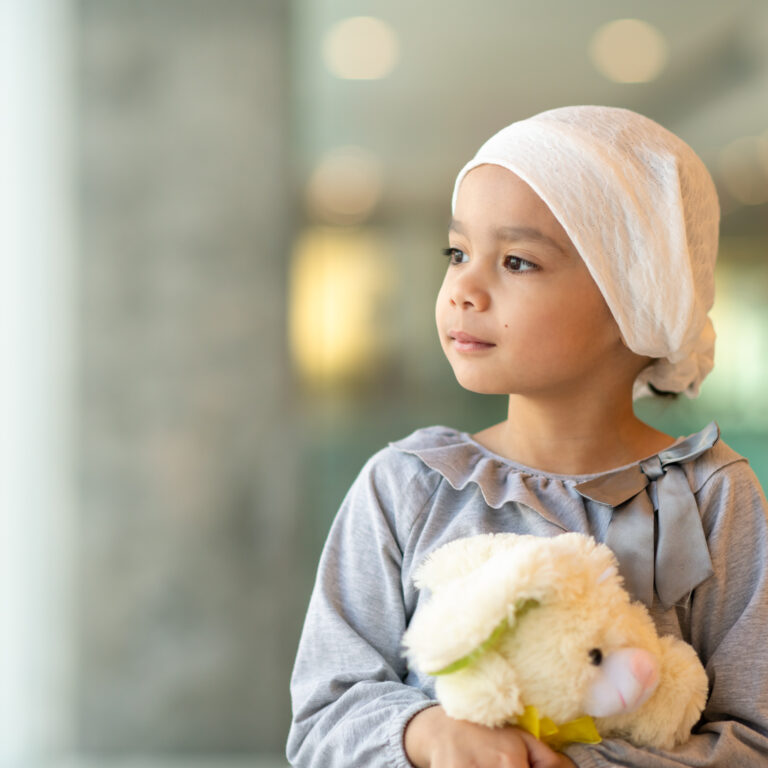
When a child has symptoms that are unusual for them, it can be deeply worrying for parents and caregivers. While statistics prove that cancer in children is uncommon, knowing what to look out for can help you feel more informed and give you confidence about when to seek medical advice.
Most childhood symptoms are caused by common illnesses, infections, minor injuries or normal changes. However, some symptoms are worth consulting a healthcare professional about, especially if they are persistent, recurring, or worsen over time. It’s important to know when to seek advice, as early diagnosis can improve treatment outcomes.
This guide explains some of the possible warning signs of childhood cancer, how these symptoms can overlap with other childhood illnesses, and what to do if you are concerned.
Are childhood cancers common?
Childhood cancer does affect children and young people in the UK and around the world, but statistics show it’s rare. In the UK, around 1,800 new childhood cancer cases are diagnosed each year in children under 15, which is around 1 in 500. Globally, it is estimated that around 400,000 young people are diagnosed with cancer each year.
Those figures can be difficult to read as a parent, but it is important to consider them in context. Most children with symptoms such as tiredness, fever, bruising, headaches or pain will not have cancer. There are many more common explanations.
Encouragingly, survival rates for childhood cancer have improved significantly over recent decades due to advances in diagnosis, treatment and supportive care. In many high-income countries, more than 80% of children diagnosed with cancer now survive for five years or longer, compared with around 50% in the 1970s.
Most common types of childhood cancer
The most common childhood cancers include:
- Leukaemia: A cancer of the blood and bone marrow.
- Brain and central nervous system tumours: May cause symptoms linked to movement, vision, balance, behaviour or headaches.
- Lymphomas: Cancers affecting the lymphatic system, including Hodgkin lymphoma and non-Hodgkin lymphoma.
- Soft tissue and bone sarcomas: These affect tissues such as muscle, fat, bone and cartilage.
- Wilms tumour: A rare kidney cancer that mainly affects young children.
What are the signs and symptoms of cancer in children?
It is important to remember that the following symptoms are not always cancer, but it is wise to have any of them checked by a doctor, especially if they are recurring, persistent or unusual for your child.
Some of the most common signs and red-flag symptoms of suspected cancer in children include:
- Unexplained lump, swelling, swollen lymph nodes or mass anywhere on the body
- Tummy (abdominal) pain or swelling that doesn’t go away
- Back or bone pain that doesn’t go away, or pain that wakes your child up in the night
- Unexplained seizures (fits), neurological symptoms and changes in behaviour and mood
- Headaches that don’t go away
- Frequent or unexplained bruising or a rash of small red or purple spots
- Unusual paleness
- Sudden weight loss
- Feeling tired all the time
- Leg weakness
- Frequent infections or flu-like symptoms
- Unexplained vomiting, especially early morning vomiting, and abdominal distension
- Unexplained fever, high temperature or sweating or night sweats
- Feeling short of breath
- Changes in the appearance of the eye or unusual eye reflections in photos
The signs and symptoms of cancer in children can vary. They depend on the type of cancer and where it is in the body.
Are signs of cancer similar to other childhood illnesses?
It can be challenging to diagnose childhood cancer based on symptoms alone, as early signs can resemble symptoms of childhood illnesses, injury, infection or ‘growing pains’.
For example:
- Fatigue may be mistaken for tiredness related to school, sport or everyday activities.
- Fever can appear similar to a viral infection.
- Bruising may be caused by play, falls or minor knocks.
- Bone or joint pain may be confused with sports injuries or “growing pains”.
- Headaches and nausea are symptoms of many childhood illnesses
In most cases, these symptoms will be caused by something far less serious than cancer. However, you should consult a doctor if any symptoms:
- persist,
- worsen over time,
- recur frequently, or
- do not respond to usual treatment
As a parent or caregiver, you know your children best. If something does not feel right or symptoms persist without a clear explanation, always seek medical advice. Early assessment can help identify the cause and ensure your child receives prompt and appropriate care.
What are the risk factors for childhood cancer?
Unlike many adult cancers, childhood cancers are not usually linked to lifestyle or environmental factors and often develop without a clear cause.
However, some factors may slightly increase the risk of childhood cancer. These include:
- Genetic conditions and inherited syndromes – Such as Down syndrome, Li-Fraumeni syndrome or neurofibromatosis.
- A family history – Certain cancers may occur more frequently in families with inherited genetic mutations, although this is rare.
- Previous cancer treatment – Children who have previously received chemotherapy or radiotherapy for another cancer may have a small increased risk of developing a second cancer later in life.
- Immune system disorders – Children with weakened immune systems, whether due to inherited conditions or medications that suppress immunity, may be at greater risk of certain cancers, such as lymphoma.
- Exposure to radiation – High levels of radiation exposure, particularly at a young age, can increase cancer risk, but it is uncommon.
- Certain viral infections are associated with a higher risk of specific cancers, such as Epstein–Barr virus (EBV), which has been linked to some lymphomas.
It is important to remember that having one or more risk factors does not mean a child will develop cancer. Many children diagnosed with cancer have no known risk factors at all, and it is always best to speak with your doctor if you have any concerns about your child’s health.
What should you do if your child is showing signs of cancer?
If your child is experiencing the symptoms of cancer described above, take the following action:
- Book an appointment to see your GP as soon as possible.
- Write down your child’s symptoms when they started, and how often they occur. This will help your doctor diagnose or rule out cancer.
- Try to be specific when explaining your child’s symptoms to your doctor. Instead of saying that your child is feeling tired all the time, describe how tired they are and how it is affecting their daily activities.
- If you have a family history of cancer or other serious health conditions, share that information with your doctor.
- If your child’s symptoms worsen or do not go away, go back to your GP to ask for further review
If they suspect cancer, they may order tests, such as a blood test, complete blood count, imaging tests, or biopsies, to help them make a diagnosis. They may refer you to a specialist if needed.
How long does a cancer diagnosis for a child take?
The time it takes to diagnose cancer in a child in the UK can vary. It depends on the type of cancer, the symptoms presenting, and the availability of tests. However, in general, the diagnosis process should not take more than a few weeks.
If cancer is diagnosed, your child’s care will usually be managed by a paediatric oncology team. This is a specialist team of doctors, nurses and other healthcare professionals who diagnose, treat and support children with cancer.
They will carefully explain the diagnosis, talk you through the treatment options, and help you understand what happens next.
How long can a child have cancer without knowing?
This can vary widely. It depends on the type of cancer, where it is in the body, how quickly it is growing, and whether it causes symptoms straight away.
Some childhood cancers, such as certain types of leukaemia, can develop more quickly and may cause symptoms over a few weeks or months. Others, including some brain tumours, may grow more slowly and cause subtle changes that are harder to recognise at first.
This can be difficult because many cancer symptoms in children can look similar to common childhood illnesses. Tiredness, fever, bruising, headaches, sickness or pain often have much less serious causes. However, symptoms are worth checking if they persist, worsen, keep returning, do not respond to usual treatment, or feel unusual for your child.
Being aware of possible warning signs is not about expecting the worst. It is about knowing when to ask for medical advice, so your child can be assessed and, if needed, receive the right care as early as possible.
Private proton beam therapy treatment for childhood cancers
Please note that proton beam therapy is not currently offered on a private basis to children living in the UK. It is sometimes offered on the NHS for certain cancers if clinically necessary. Speak to your child’s pediatric oncology team to explore your options.
Proton beam therapy is an advanced form of radiotherapy that uses targeted proton beams to treat cancer. It can deliver radiation more precisely to the tumour while reducing exposure to nearby healthy tissue. This may be especially beneficial for children, whose bodies are still developing, as it can help reduce the risk of long-term side effects and support quality of life after treatment.
At Proton International London, we welcome children from outside of the UK for treatment at our private clinic in partnership with University College London Hospital (UCLH).
Read more about the benefits of proton beam therapy for childhood cancers. You can also explore our services for international patients here.
If you have any questions, please do not hesitate to get in touch. To speak to our team, call 020 4629 3598, Monday to Friday, 9am to 10pm GMT, or complete our enquiry form.